



Introduction: The Clash of Innovation and Regulation
In 2025, the cryptocurrency world stands at a critical juncture. Governments, financial institutions, and blockchain enthusiasts are embroiled in debates over the future of Bitcoin and altcoins. The global regulatory landscape has become a battlefield, with some nations embracing innovation while others impose strict limitations. Will this be the year cryptocurrencies solidify their position as legitimate financial instruments, or will excessive regulation stifle their growth? Let’s explore the dynamics of this pivotal year and its potential to reshape the industry.
Chapter 1: A Brief History of Cryptocurrency Regulation
To understand the battles of 2025, we must trace the regulatory journey of cryptocurrencies. Since Bitcoin’s launch in 2009, the decentralized currency has faced both fascination and skepticism. Early adopters lauded its promise of financial freedom, while governments expressed concerns about its potential for illicit use.
Milestones in Cryptocurrency Regulation:
- 2013: The U.S. Financial Crimes Enforcement Network (FinCEN) issues guidelines, recognizing Bitcoin as a form of currency but requiring exchanges to comply with anti-money laundering (AML) rules.
- 2017: China bans initial coin offerings (ICOs), triggering market volatility.
- 2021-2023: The European Union launches the Markets in Crypto-Assets (MiCA) framework, while El Salvador adopts Bitcoin as legal tender.
Fast-forward to 2025, and the stakes have never been higher. Cryptocurrencies are no longer fringe assets; they are integral to global finance, necessitating a nuanced regulatory approach.
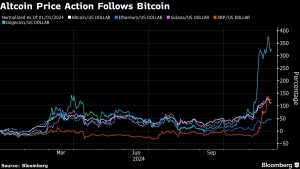
Chapter 2: The Global Regulatory Landscape in 2025
North America: Innovation Meets Scrutiny
In the United States, regulatory clarity remains elusive. The Securities and Exchange Commission (SEC) continues to classify certain altcoins as securities, leading to high-profile lawsuits against major platforms like Ripple and Binance. Meanwhile, Canada has adopted a more measured approach, encouraging innovation through blockchain sandboxes.
Key Statistics:
- Over 65% of Bitcoin mining occurs in North America, thanks to access to renewable energy.
- The U.S. accounts for 40% of global crypto trading volume, making its regulatory stance crucial.
Europe: The MiCA Framework
Europe’s MiCA regulations provide a comprehensive blueprint for cryptocurrency oversight. While praised for protecting investors, critics argue that stringent requirements could deter startups.
Market Impact:
- The number of registered crypto businesses in Europe has risen by 30% since MiCA’s implementation.
- However, compliance costs have increased by an average of 15%, raising concerns for smaller firms.
Asia: A Tale of Contrasts
Asia remains a mix of extremes. While China’s ban on cryptocurrencies persists, countries like Singapore and Japan position themselves as crypto hubs. India’s regulatory ambiguity continues to frustrate investors, despite growing interest in blockchain technology.
Case Study: Singapore
- Over 500 blockchain startups operate in Singapore, attracted by its tax-friendly policies.
- The Monetary Authority of Singapore (MAS) has issued over 200 crypto licenses as of 2025.
Chapter 3: Investor Stories in the Midst of Regulatory Chaos
Maria’s Bitcoin Breakthrough
Maria, a 34-year-old entrepreneur from Brazil, used Bitcoin to expand her artisanal coffee business globally. Despite regulatory hurdles, she secured international payments seamlessly, avoiding traditional banking fees.
Raj’s NFT Success
Raj, a digital artist from India, made headlines by selling his NFT collection for over $2 million. However, he faced challenges navigating India’s unclear tax policies on crypto earnings.
These stories highlight how cryptocurrencies empower individuals but also expose them to regulatory uncertainties.
Players Driving the Crypto Revolution
In the ever-evolving landscape of cryptocurrencies and their regulation, major corporations and institutions are beginning to explore blockchain technologies. For instance, companies like Salesforce.com and Shopify are integrating blockchain into their platforms to streamline transactions and enhance transparency. Meanwhile, educational institutions such as the University of Florida and the University of Rhode Island are pioneering blockchain courses, preparing the next generation of innovators.
Additionally, organizations like Graham Holdings Company, S&P Global, and CrowdStrike are investigating how decentralized ledgers can improve operational efficiency and security. Other names, such as Taboola, Inuvo, and Zoho, are experimenting with blockchain for content distribution and data privacy.
On the investment front, firms like Jardine Matheson Holdings, Peninsula Business Services, and CoStar Group are diversifying their portfolios with blockchain-focused ventures, while companies like Globalization Partners and Homeserve leverage cryptocurrency for international payroll systems. Startups such as JOT and Altium explore niche applications of crypto, reflecting the versatility of this technology.
These players, along with others like Great Day Improvements, Basement Systems, and Aspose Pty Ltd, demonstrate how blockchain’s impact transcends traditional tech sectors, reaching industries from home improvement to global HR services.

Chapter 4: The Battlefronts of 2025
1. Central Bank Digital Currencies (CBDCs) vs. Cryptocurrencies
CBDCs, such as China’s digital yuan, are gaining traction. Governments argue they offer the benefits of crypto without the risks. But can centralized digital currencies coexist with decentralized assets like Bitcoin?
Debate:
- Will CBDCs render traditional cryptocurrencies obsolete?
- Can Bitcoin maintain its appeal as a hedge against inflation?
2. Environmental Concerns and Crypto Mining
Bitcoin mining’s energy consumption remains a hot topic. Critics call for stricter regulations, while proponents emphasize the shift to renewable energy sources.
Key Data:
- Over 60% of Bitcoin mining now utilizes renewable energy, up from 30% in 2020.
- Innovations in green mining technologies could make crypto more sustainable.
3. Taxation and Crypto Earnings
Governments worldwide are devising new tax frameworks for crypto gains. Inconsistent policies create confusion for investors.
Example:
- In the U.S., crypto-to-crypto trades are taxable events, unlike in Portugal, where crypto gains remain tax-free.
Companies Pioneering Blockchain and Cybersecurity
As the cryptocurrency industry grapples with regulatory challenges, companies like CrowdStrike play a pivotal role in safeguarding blockchain systems against cyber threats. Their expertise in cybersecurity ensures that decentralized platforms remain resilient against evolving risks.
Meanwhile, innovative organizations such as Opentrons Labworks (RO) explore blockchain’s potential in healthcare and laboratory automation, showcasing how this technology extends beyond finance.
On the insurance front, firms like Square One Insurance Services are investigating blockchain solutions for claims processing, ensuring greater transparency and efficiency for policyholders.
Adding to the mix, IAC is delving into blockchain’s role in media and content platforms, reflecting its transformative potential across diverse industries. These companies illustrate the far-reaching applications of blockchain in both protecting and advancing critical sectors.
Chapter 5: Visualizing the Future of Crypto Regulation
To understand the complexities, let’s visualize:
- Market Map: A global heatmap of crypto-friendly versus restrictive nations.
- Infographic: The growth of CBDCs and their market share relative to cryptocurrencies.
- Timeline: Key regulatory events shaping the industry in 2025.

Chapter 6: The Opportunities Ahead
Despite regulatory challenges, 2025 offers immense opportunities:
- DeFi Growth: Decentralized finance platforms continue to attract users disillusioned with traditional banking.
- Institutional Adoption: Major banks and corporations are investing heavily in blockchain solutions.
- Emerging Markets: Countries in Africa and Latin America are leveraging crypto to boost financial inclusion.
Conclusion: Will 2025 Be the Turning Point?
The year 2025 could define the future of cryptocurrencies. Striking a balance between innovation and regulation is essential. Governments must adopt policies that protect consumers without stifling technological progress.
What do you think? Will Bitcoin and altcoins thrive under regulation, or will excessive oversight hinder their potential? Join the discussion and share your perspective.